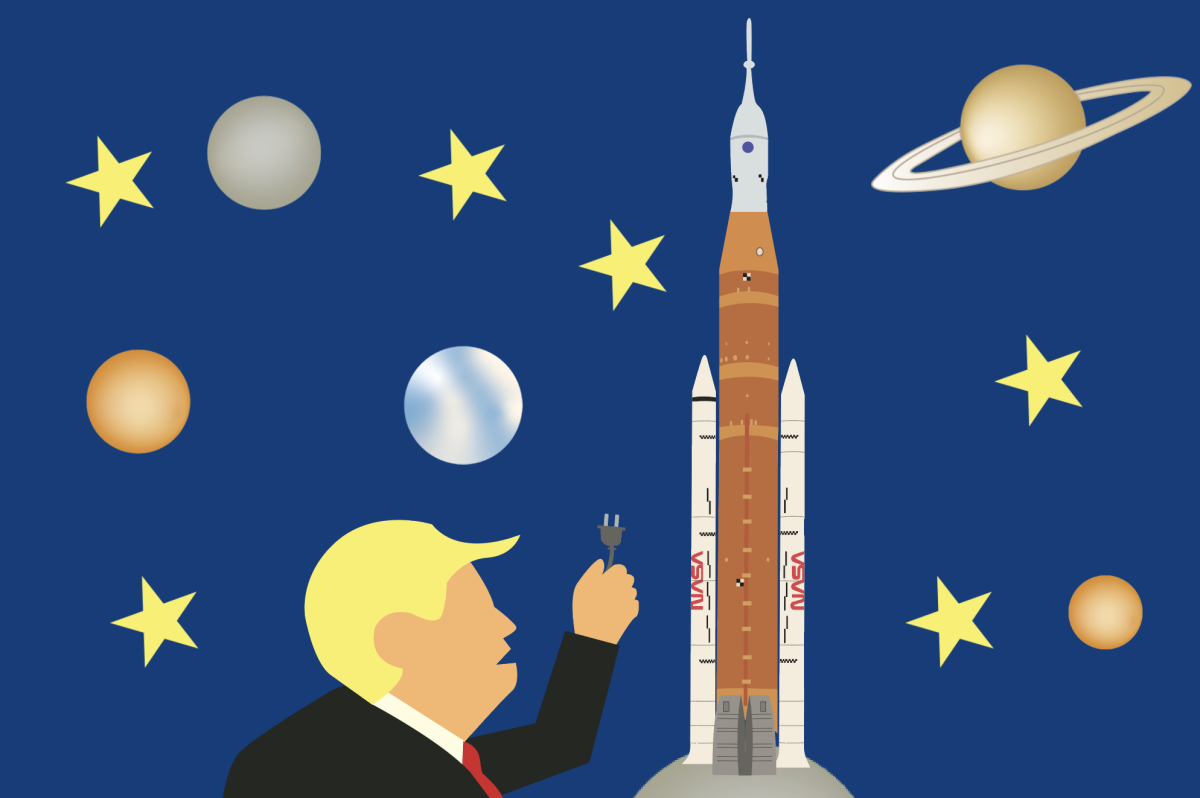


After seven weeks of gas price inflating and global tensions rising, the United States and Iran entered a two-week ceasefire on April 7. While U.S Defense Secretary Pete Hegseth declared the destruction in Iran a “historic and overwhelming victory,” the United States and Iran were unsuccessful in reaching a ceasefire agreement in Pakistan, failing to end the war.
On the first day of the war, the United States killed the Supreme Leader of Iran, Ali Khamenei. According to Reuters, more than 3,000 Iranian citizens have been killed, over half of them were civilians not engaged in the war, and 254 were children.
The Iran war began Feb. 28 when the United States and Israel bombed Iran. The bombardment continued for seven weeks until the ceasefire was enacted. Additionally, according to the Center for Strategic and International Studies, the United States’ failure to notify its allies of its attack on Iran has resulted in higher international political tensions among the United States and its European allies.
On April 1, President Donald Trump gave a presidential address on the war in Iran. In the almost 20 minute address, Trump said he believes this war is a result of past U.S. presidencies failing to stifle Iran’s nuclear power; Looking toward the future, Trump said his goal for the war is preventing Iran from obtaining nuclear weapons.
According to the U.S. Central Command, when the United States attacked Iran, it also announced Operation Epic Fury: an attack on the “Iranian regime’s security apparatus, prioritizing locations that pose an imminent threat.” According to the Public Broadcasting System, nearly 400 Americans have either been killed or wounded 40 days after Operation Epic Fury had gone into place. According to Reuters, more than 3,000 Iranian citizens have been killed, over half of them were civilians not engaged in the war, and 254 were children.
The United States has also strategically targeted the Strait of Hormuz, a critical waterway for exiting the Persian Gulf as well as transporting oil. According to the International Energy Agency, in 2025, 34% of the world’s crude oil trade was transported through the Strait of Hormuz.
According to the American Automobile Association, the current average price for gas is $4.09, nearly one dollar more than a year ago. According to the New York Times, Trump said that gas prices may not drop by the November midterms.
The war entered a two-week ceasefire on April 7, and was followed with a meeting in Islamabad on April 11. However, Vice President J.D. Vance announced that negotiations in Islamabad over peace terms failed. Furthermore, according to the Washington Post, thousands of U.S. troops are being sent to the Middle East amidst the ceasefire.
The morning of April 17, despite the United States continuous blockade of the Strait of Hormuz, Iran agreed to reopen the strait. According to The New York Times, Trump said he was sending negotiators to Pakistan, to reattempt peace talks, however Iranian officials said they had “no plans” for peace talks after the United States fired upon and seized an Iranian ship in the Strait of Hormuz.
As of April 22, Trump said he will extend the ceasefire until an agreement can be made, but will continue to blockade Iranian ports.