
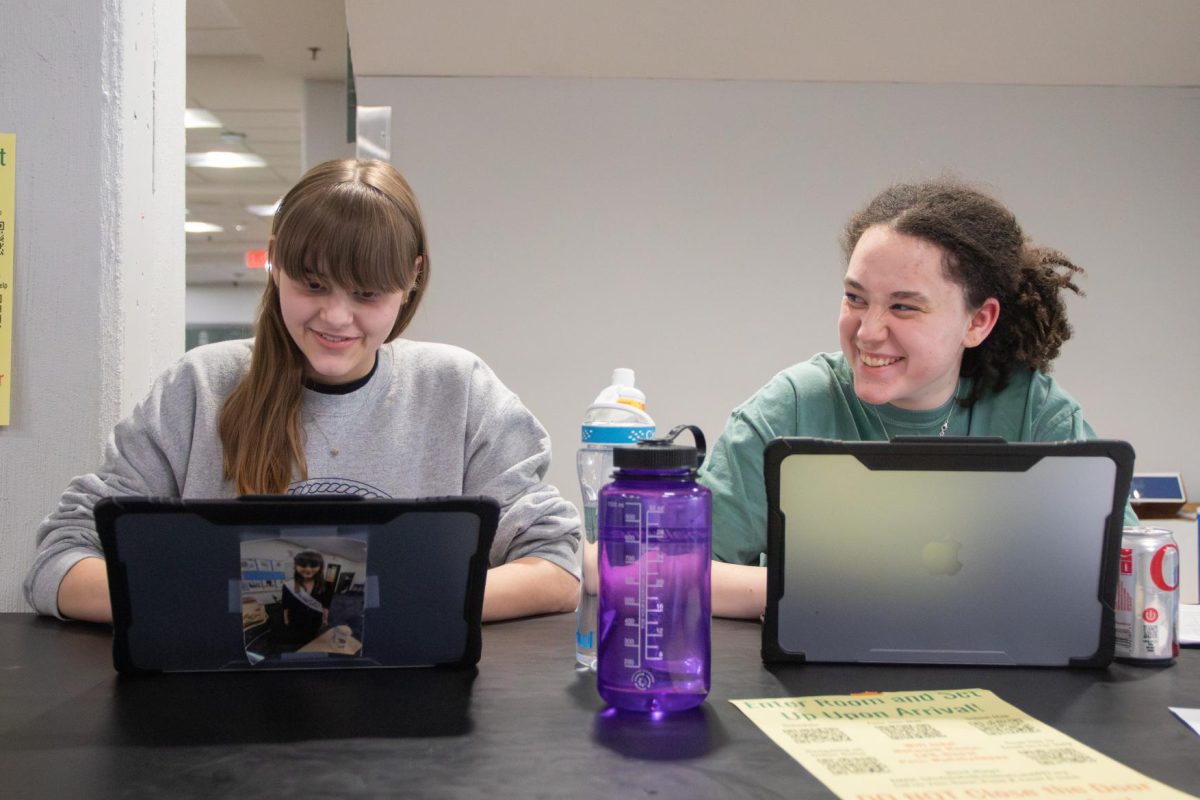
While still in high school, many debate and forensics students not only work with assistant coaches to improve their speaking skills but also help coach underclassmen to prepare for tournaments. This tradition of coaching while being coached has improved the overall morale and comradery of the forensics community.
There are various types of speeches judged in forensics tournaments and each has its own delivery needed. In each practice with a coach, students receive notes on what they need to improve, such as body movement during the speech.
Having graduated from Free State three years ago, current junior at the University of Kansas Cici Hunter said she decided to come back to be an assistant coach to give back to the program that had taught her so much. Hunter said she was thankful for the adults who helped her during her three years spent as a part of the forensics program and wanted to be that adult for the kids currently in the program.
“I want to help these kids. I want to help see them succeed. A lot of my job is having difficult conversations with kiddos who are not really feeling competitive, or they’re feeling burnt out, or they’re not getting the results they want,” Hunter said. ”[Coaching is] talking about it with them, talking about what their goals are and how I can help them get to wherever they want to go,” Hunter said.
When students progress in forensics, they are allowed the ability to begin coaching the first-year students, called novices, in addition to still being coached by assistant coaches and fellow upperclassmen. Sophomore and second year Sophia Dietze, who both coaches underclassmen and is coached by upperclassmen, said that she feels more mentally prepared going into tournaments after being coached.
Four year forensics participant, senior Breahna Randall said she has been coaching novices out of class for the last year and, in that time, she has seen the community grow to be very close-knit. Randall said that the healthy environment has led to better teamwork before tournaments.
“Because I joined the speech and debate program, I became much more confident in myself, because I recognized that making mistakes were okay and I’m still able to communicate my ideas well, even if I make mistakes,” Randall said. “Speech and debate really flipped the entire way I viewed not only myself, but also the way I interact with others.”
Just like Hunter, Randall said she plans on returning to be an assistant coach in a few years after settling in as a student at KU. Looking back, she said coaching forensics has helped her be proud of herself and her peers.
“It’ll make me sad to leave behind something I’ve been doing for the past four years that has really shaped me as a person and helped me grow in my confidence and my communication skills,” Randall said. “… It brings me so much joy and so much love to be able to work with the students over something that literally changed my life for the better.”