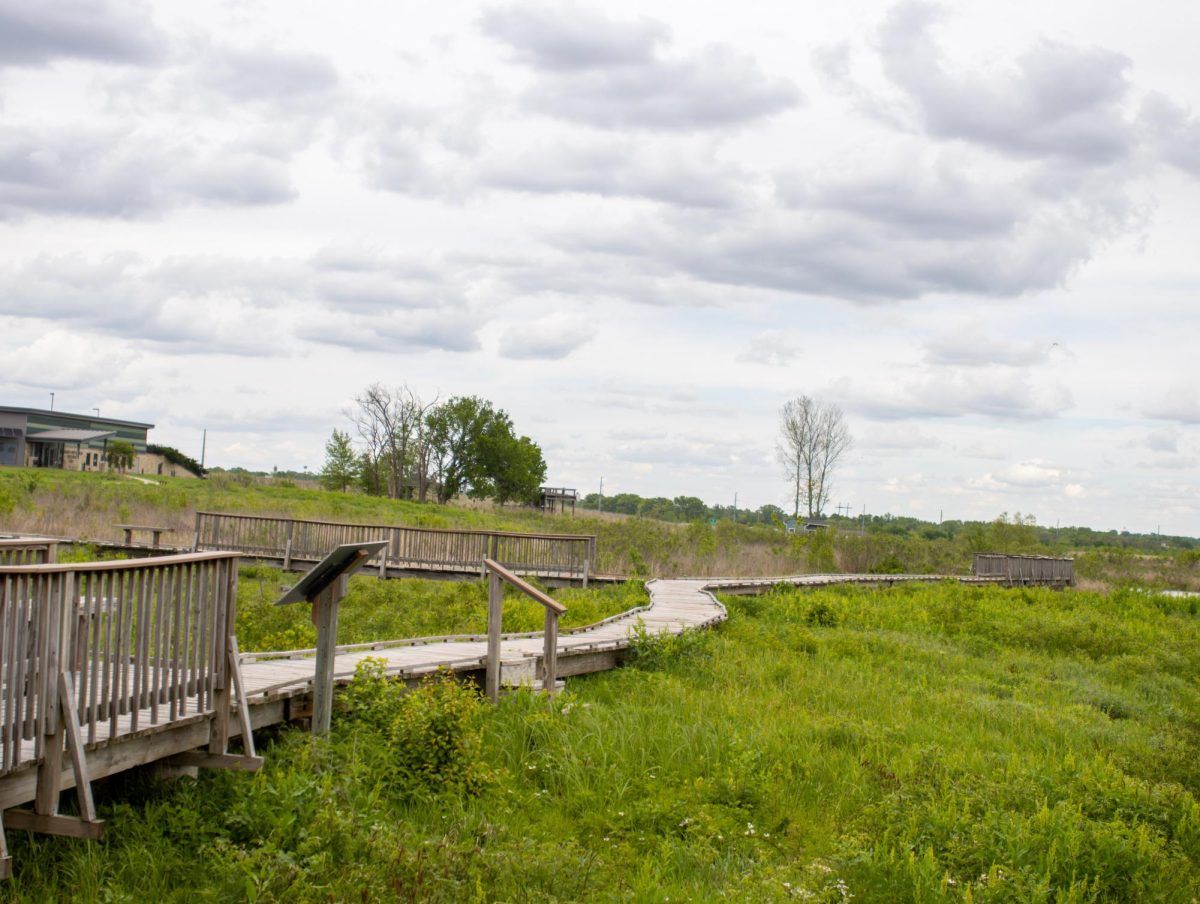


A bridge on the south side of the building facing Overland Drive has become a hotspot for skipping, harassment and illegal activity. The bridge, which lays between a pond and tree line, is frequently lined with students during lunch and after school.
Administrators said they are concerned about the bridge and the activities that take place there. The bridge is not district or school property, so staff aren’t allowed to enforce school rules in that area. Security officer Dee Kemp said the bridge was harmful to students because it’s close to campus but exempt from its policies.
“That bridge was the worst thing that happened to Free State,” Kemp said “Kids go there because they know we can’t go off campus and police it so people are getting yelled at and cursed at. People are throwing stuff at the cars, just being rude and crazy.”
Assistant Principal and Activities Director Matt Renk said the bridge is owned by an out-of-state company that Free State does not have contact with. Recently, graffiti was removed and most of the trash has been picked up. The company also placed no trespassing signs around the area.
“I do think that whoever owns it has cleaned up that area because I noticed that they now have no trespassing signs on there. So now police can go there if people are sitting there,” Renk said.
Renk also said he notices more students skipping during lunch than any other time, which may be a result of open lunch. Kemp said he agrees that open lunch may encourage students to skip class, but he wants to explore other options before closing lunch.
Renk also said that chronic absenteeism has many consequences for students and parents. Parents are notified every time a student skips class and administrators involve them in preventative measures. Chronic skipping can make a student eligible for truancy, lunch detention and loss of school privileges. Kemp said absenteeism doesn’t just affect students now, it also sets them up for failure later in life.
“[Students] get stuck in that habit of not going and then it just gets worse and worse, and then that high school student that didn’t go to class is an adult that doesn’t go to work. So it hurts them now, and it’s going to hurt them later in the future,” Kemp said.