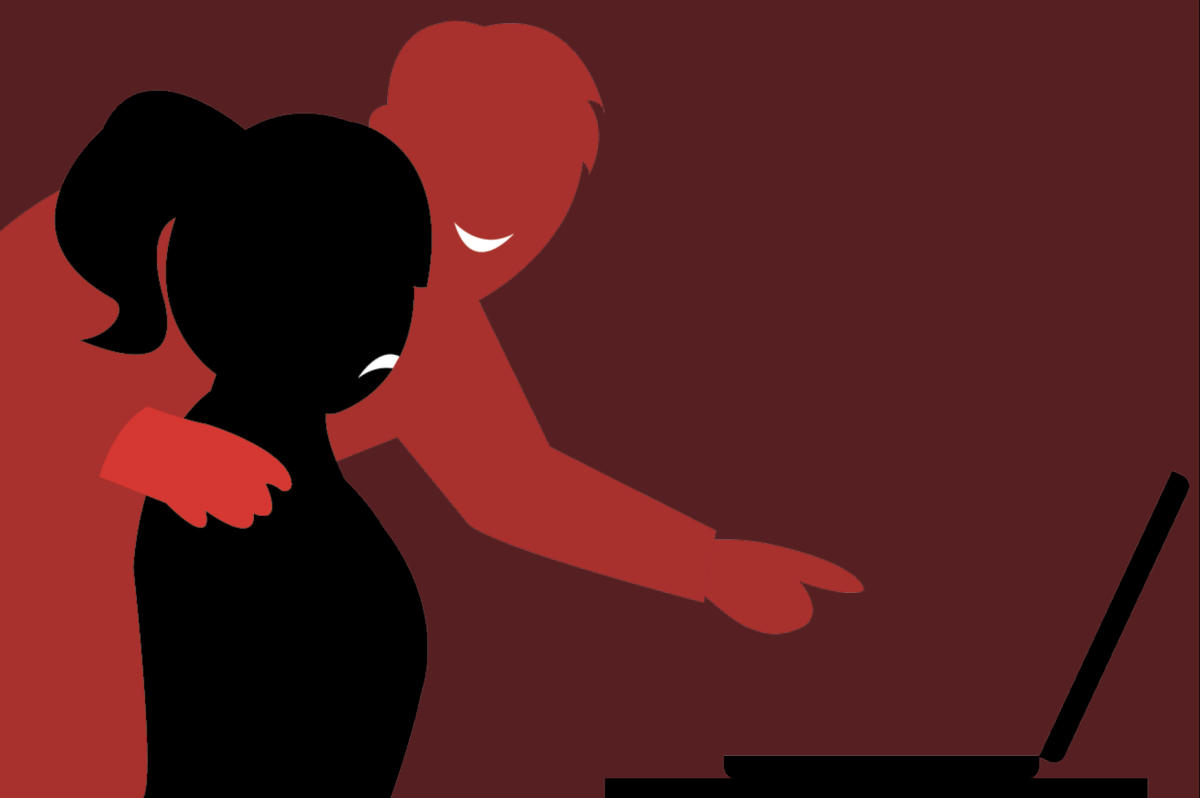


Presidents throughout the 20th and 21st century have often been defined by their brigade against the top perceived threat of the time, such as Lyndon B. Johnson’s “War on Poverty,” Richard Nixon’s “War on Drugs” or George W. Bush’s “War on Terror.” The first 10 months of President Donald J. Trump’s term could be called the “War on the Media.”
Across political lines, trust in the media is at an all-time low. According to Gallup News, public confidence in the media has been declining steadily since the 1970s, with a current low of 28% among Democrats and Republicans, including a record low of 8% confidence among Republicans.
The relationship between citizens and their news sources has been decaying for decades, so by the time Trump began campaigning in 2015, he was stepping into an environment already primed for skepticism, but he accelerated this backslide into what is seen today in 2025.
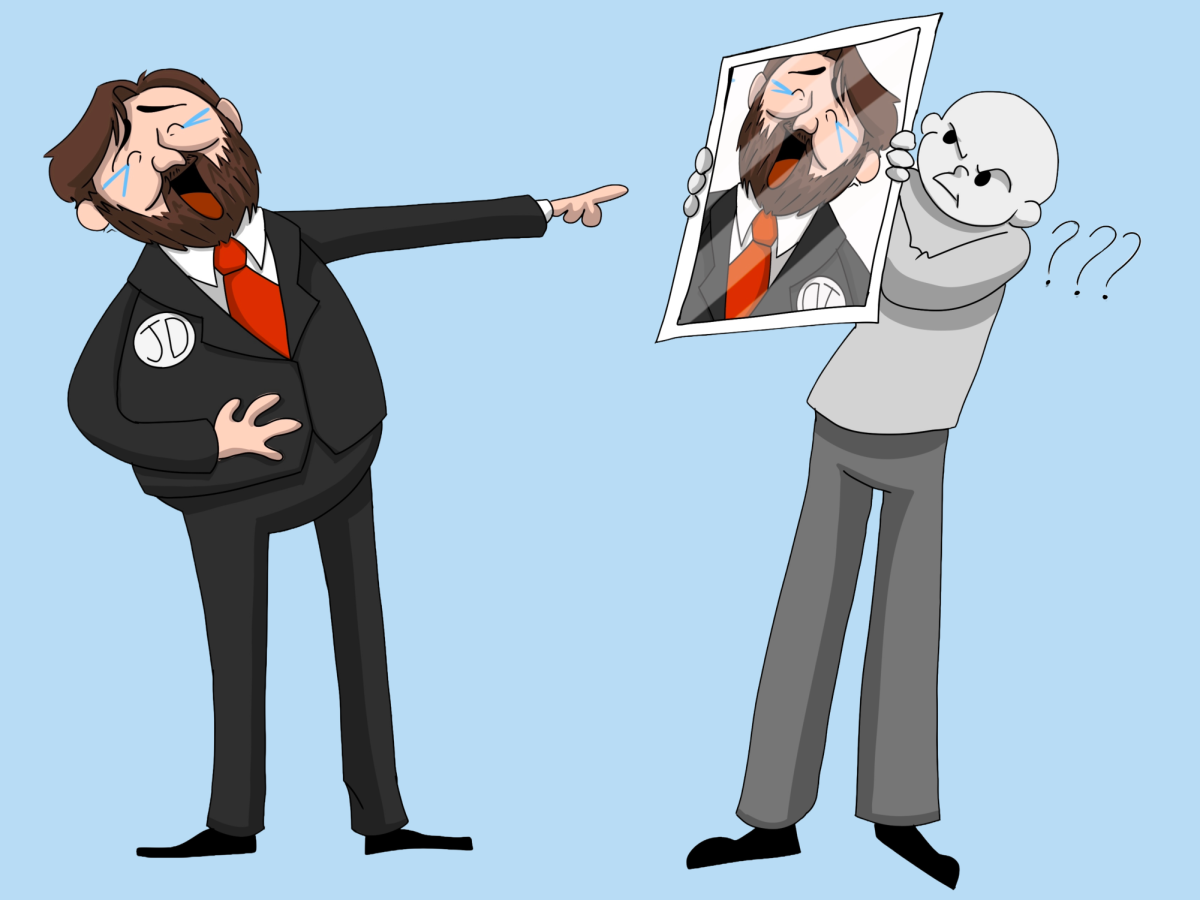
Since Trump’s first 2016 campaign, he has been in opposition to the media, often referring to it as “scum,” “sick” and “low IQ,” and even going as far as calling the news media “the enemy of the American people” at one of his 2019 rallies.
However, this directly contradicts what journalism’s role in democracy has always been: to inform the public, hold the powerful accountable and serve as a watchdog over government actions. Since the right to freedom of the press was written in the constitution, journalism, as an institution, is a vital guard to leveling the power between citizens and the government.
Yet, as more Americans grow disillusioned with traditional news outlets, they’re increasingly turning to social media for information. According to the Pew Research Center, 55% of TikTok users now say they regularly get their news from the app, which is up from a mere 22% in 2020.
Trump himself has not only partaken in this shift but also popularized it with politicians. Rather than relying on press briefings or formal interviews, he often uses platforms like Twitter to communicate directly to the public, bypassing the media and presenting his own narrative with limited scrutiny.
But with each degree of separation away from traditional, journalistic sources—and the laws, ethics, and editorial systems designed to prevent misinformation—we move further from reporting grounded in verifiable, unbiased fact.
Trump has not only benefited from this environment of misinformation but has helped make it an accepted norm.
During Trump’s 2024 presidential debate with democratic candidate Kamala Harris, he was reported as making 33 false claims when being fact-checked live by ABC. This pattern has only continued with his statements post-election; according to NBC, Trump made over 160 false claims during a press conference last August.
Unfortunately, the average public statement does not have a fact check above its head. Much of what Trump’s 2024 campaign was based on was contingent on lies. Trump habitually over-exaggerates numbers to support his point; for example, according to CNN, Trump inflated the number of how many people crossed the border by 10 thousand, saying 21 million people had been arrested when only 10.8 had been.
This process of continuously treating distorted or exaggerated information as if it is typical, credible news has a name: sanewashing.
According to the Merriam-Webster dictionary, sanewashing is “the practice of making irrational, extreme, or otherwise problematic people or ideas appear more reasonable or normal.” In the context of Trump, by consistently blurring the line between fact and fiction, he not only protects his own narrative from scrutiny but also pressures media outlets and the public to accept distorted information as part of the political mainstream.
Competing with the extremes the president is constantly allowed to publicly release, news sources are forced to pander more towards emotions rather than facts to get engagement. Outrage, fear and sensationalism become the easiest ways to capture attention in a landscape where attention is currency, leaving serious reporting and nuanced truth lost to clickbait headlines and ragebait.
In this kind of environment, there are no true neutral parties; media outlets have more to gain from supporting people’s preexisting narrative or playing into people’s fears rather than reporting honest truths. From there, the general population becomes divided, trusting only the news that fits their beliefs and ignoring the rest.
When trust in the media is already diminishing, people are already in the mindset to tune out pressing news. According to The Guardian, news avoidance refers to the practice of avoiding news content, and the United States has one of the highest rates of it.
This new culture of apathy and willing ignorance only makes it easier for an unfavorable legislature to pass without opposition. If citizens stop tuning in to national news, they concede their most powerful, democratic tool.
Amid all these distractions, political leaders can more easily align public perception with their own interests, unchallenged by a vigilant and trusted press.
Now more than ever, we need a renewed commitment to factual, independent journalism and a public willing to value it. If we do not have that shared baseline of mutually agreed-upon facts, there’s no foundation on which to debate, compromise or unite. Without trusted, unbiased news, democracy will erode.
But recognizing the problem is only the first step; what matters is how we respond. As citizens, students and future voters, we have a responsibility to push back against the culture of misinformation and apathy. This means seeking out reputable sources, questioning claims that feel designed to provoke emotion, and resisting the urge to disengage when the news feels overwhelming.
Democracy cannot function if we allow ourselves to be overwhelmed into inaction. It is imperative to push ourselves through fatigue and frustration because disengaging from the news is exactly what those spreading misinformation want us to do.
“Independent journalism is the exact tonic the world needs most at a moment in which polarization and misinformation are shaking the foundations of liberal democracies and undermining society’s ability to meet the existential challenges of the era,” New York Times publisher A.G. Sulzberger said.
A vigilant press and an engaged public are not optional to a healthy democracy; they are essential. The press isn’t the enemy of the people; it’s one of the last defenses the people have left.