
When comedian and actor Chevy Chase first shouted, “Live from New York, it’s Saturday Night!” in 1975, he didn’t just kick off a sketch comedy show; he unleashed a new form of political accountability. Saturday Night Live added another watchdog to the public square, one unbounded by the ethical and professional guidelines that journalists are obliged to follow. Suddenly, the absurdity of American politics was televised, replayed and laughed at, not just confined to newspaper columns. If a politician fumbled on a Tuesday, the country would be laughing by Saturday.
For decades, political humor worked because it stung a little. It didn’t change policy, but it bruised egos. It reminded the powerful that the public was watching, and worse: the public could tell they looked ridiculous. No matter how exaggerated, satire holds up a mirror, and the reflection is rarely flattering.
Commentator Will Rogers said it best a century ago: “Everything is changing. People are taking their comedians seriously and the politicians as a joke.” What he could not have predicted is that politicians would start writing the jokes.
In recent years, politicians have begun to use humor as a form of insulation, rather than absorbing it as criticism. Jokes that once exposed corruption are now weaponized by politicians to soften the blow before it even lands.
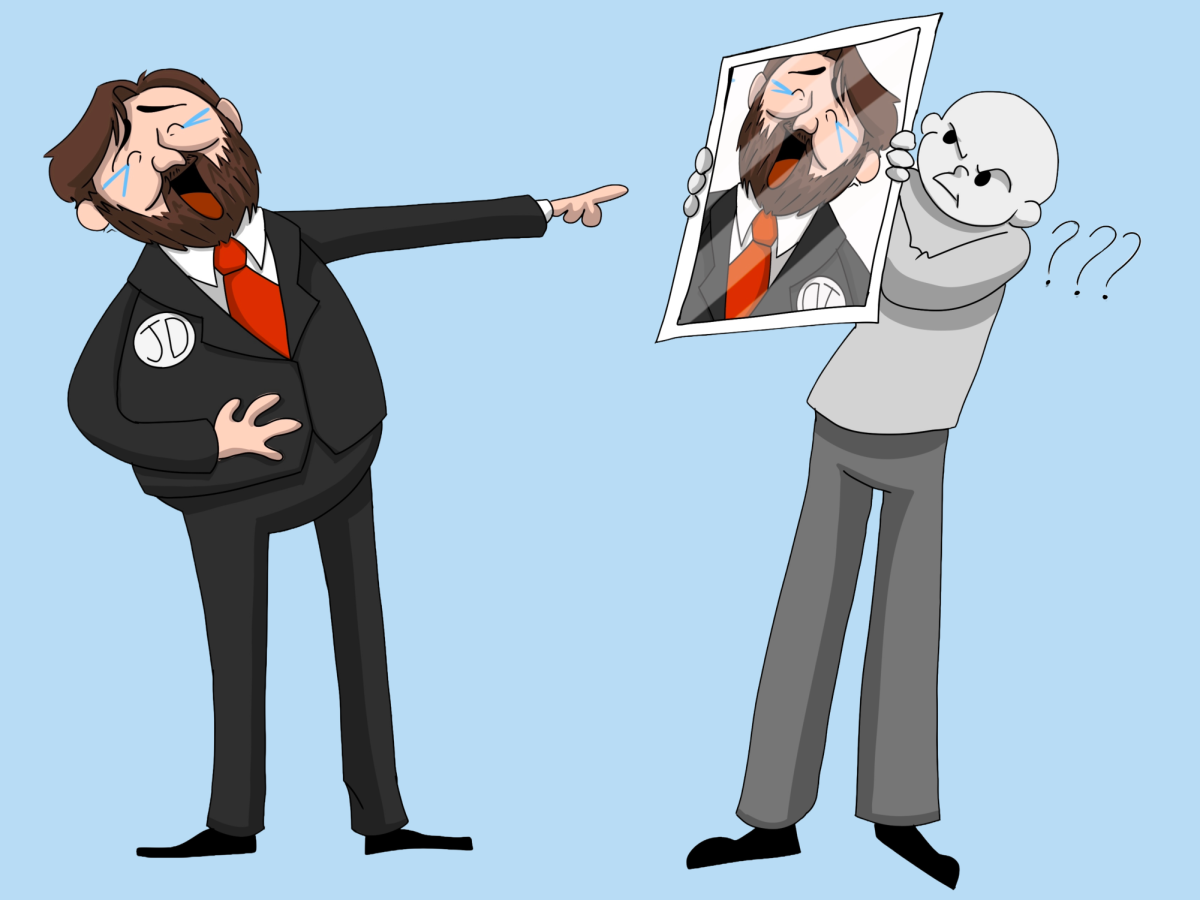
Most recently, Vice President JD Vance dressed up as his own viral internet meme, “Fat JD,” for Halloween. The meme features a digitally altered image depicting Vance with an enlarged red face, long curly hair and a dopey, wide-eyed facial expression. This is the same meme that got a Norwegian tourist denied entry to the United States in June because Immigration and Customs Enforcement found the image on his phone.
However, on Halloween, Vance posted a social media video of himself in costume, saying, “Happy Halloween, kids. And remember: say thank you,” a reference to his meeting with Ukrainian President Volodymyr Zelenskyy, where Vance said that Zelenskyy should be thanking President Donald Trump.
There is, of course, a place for genuine self-deprecation. No one wants their leaders so fragile that they crumble at every jab, but there’s a difference between humility and deflection, and right now the latter is winning.
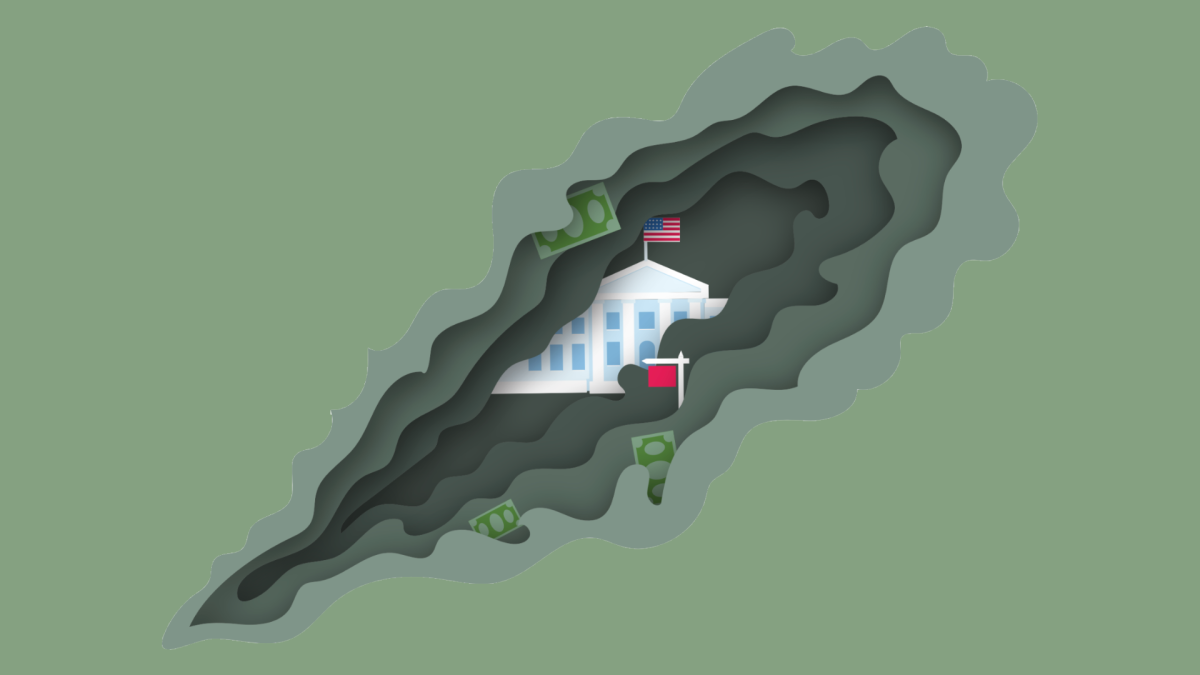
The larger issue at hand isn’t just that politicians are joking; it’s that they feel no shame. When Trump frames his mugshot outside of the Oval Office, when George W. Bush laughs about his malapropisms, when Joe Biden makes quips about his age, they’re all sending the same message that nothing you can say about them can hurt them. It’s a clever media strategy, but it’s dangerous for democracy.
Democracy relies on the idea that citizens can exert pressure on the elected officials who pledged to act in their best interest. Without the power of effective mockery, the public loses one of its few non-institutional tools to hold power to account. A leader who cannot be embarrassed is a leader who cannot be corrected.
Political satire depends on the imbalance of power: the comedian punches up, and the politician takes the hit, feels the shame and does better. When those roles erode, the mirror cracks. The public can’t lower its standards just because its leader decided they no longer have any. Politicians need to remember that we’re laughing at them, not with them.